







Search Results for: Don Cayito Estate
A Deep Dive into Don Cayito: A Renowned Estate in Costa Rica's Tarrazú Region
Although Costa Rica is not a large country, it is a force to be reckoned with on the coffee map of Central America. As the world's fourteenth-largest coffee producer, it has seven regions each with its own terroir, among which Tarrazu is known for its high altitude, ample rainfall, and the nourishment of warm, moist Pacific air currents, and is also a concentration of Cup of Excellence (COE) award-winning estates. At the 2024 COE, Don Cayito won first place with 93.62 points, once again making this family estate the center of attention. This article will guide you through Costa Rica's coffee geography and take a deep dive into the Santa Maria de Dota area of Tarrazu, sorting out Don Cayito's variety structure, family management lineage, and COE track record over the years, while also including Front Street Coffee's recommendation information for this estate, as a reference for coffee lovers when making purchases. [more…]
Panama's Kotowa Family Three Estates: Flavor Stories and Origin Analysis of Geisha Coffee Beans from Kotowa, Don K, and Duncan
On the map of Panama's specialty coffee, the name Kotowa has always been closely linked with exceptional quality. The three estates left by founder Alexander Duncan—Jaramillo, Don K, and Duncan—each possess unique microclimates and terroir, giving rise to distinctly different coffee flavors. From the warm sweetness of Jaramillo, to the sharp acidity and stone fruit notes of Don K, to the delicate honeysuckle-citrus profile of Duncan, each estate tells the legend of the terroir of the Boquete Valley. This article will guide you through an in-depth look at the geographical conditions, processing methods, and flavor characteristics of these three estates, along with selected recommendations from Front Street Coffee, offering professional guidance for your coffee exploration journey. [more…]
Costa Rica Don Mayo Estate Geisha Flavor Analysis: A Complete Guide from Cup of Excellence Champion to Honey Processing
Don Mayo Estate is located in the Tarrazú region of Costa Rica and has been managed by the Bonilla family since 1994. With its high-altitude terroir and meticulous management, it has won numerous awards in Cup of Excellence competitions. The estate comprises fourteen plots, cultivating varieties such as Geisha and Catuai, and is renowned for its honey processing. This article reviews the estate's development history, plot characteristics, and award-winning journey, and combines two beans sourced by Front Street Coffee—Cedar Plot Red Honey Geisha and Vista Plot Black Honey Catuai—to present their flavor profiles and processing details for coffee enthusiasts' reference. [more…]
Panama Duncan Estate Geisha Coffee Beans: Flavor Differences Between Natural and Washed Processing Methods and Analysis of the Estate's Characteristics
Panama Duncan Estate, as a renowned specialty coffee estate under the Kotowa family, is famous for its Geisha variety and meticulous picking techniques. This article provides a detailed analysis of the geography and terroir of Duncan Estate and Don Herrera Estate, the impact of altitude and climate on coffee quality, and the unique features of the top picking method and the reserve picking method; it also compares the flavor differences between the natural and washed processing methods, and includes the BOP award records over the years and complete estate information. Front Street Coffee recommends paying attention to the jasmine floral aroma and tropical fruit complex flavors of its Geisha variety, which is suitable for coffee enthusiasts to gain an in-depth understanding of the ultimate charm of Panamanian specialty coffee. [more…]
Exploring the Four Famous Estates Under Panama's Kotowa and a Flavor Analysis of Duncan Natural Caturra Pour-Over
The Kotowa family of Panama began writing their coffee legend in the late 19th century, and today they own seven farms, among which five are well known to coffee enthusiasts: Duncan Estate, Don K Estate, Crystal River Estate, Traditional Catuwha Estate, and Witch Estate. This article takes you through Kotowa's century-long history, uncovering the stories behind the estate names and the water-driven machinery in the processing plant, while focusing on the Duncan Estate sun-dried Caturra that Front Street Coffee has sourced. From dry aroma to first sip, we break down its floral notes, red grape, dried fruit, prune, and fermented character layer by layer, presenting the complete flavor profile under a medium-light roast. [more…]
Panama Specialty Coffee Association and Producing Regions: From the BoP Competition to the Geisha Flavor of Kotowa Estate
Although Panama is a small country, it occupies a pivotal position in the world of specialty coffee. This article begins with an overview of Panama as a nation, then traces its coffee-growing history, the three well-known producing areas in Chiriquí Province, its main varieties and processing methods, and focuses on the Specialty Coffee Association of Panama (SCAP) and the Best of Panama (BoP) competition. It also details the family heritage of Hacienda La Catoiva, the flavor differences between the Duncan and Don Hé plots, and the cupping performance of the 2017 BoP auction lot of natural Geisha. Front Street Coffee recommends paying attention to the charm of Geisha from this producing region. [more…]
Century-Old Coffee Legacy at Panama's Kotowa Estate: Duncan Estate Natural Caturra Flavors and Front Street Brewing Sharing
Kotowa Estate is a long-established coffee family in the Boquete region of Panama. Its story began in the late 19th century, when Canadian immigrant Alexander Duncan McIntyre cleared land and planted coffee at the foot of Volcán Barú, and it has now been passed down through four generations. The estate owns several well-known farms, including Duncan, Don K, and Bruja, and has repeatedly achieved excellent results in competitions. This article reviews Kotowa's century-long development, the origin of the estate's name, and the historical equipment of its processing plant, and also presents the cupping flavors and pour-over parameters of the sun-dried Caturra from Duncan Estate purchased by Front Street Coffee, for the reference of coffee enthusiasts. [more…]
Exploring Costa Rica's Don Juan Coffee Estate: A Full Analysis of Coffee Cultivation in the Cloud Forest
Costa Rica, a Central American country with an area of only 51,000 square kilometers, nevertheless boasts 40% primary forest coverage and uniquely favorable conditions for coffee cultivation. Don Juan Coffee Estate, nestled in the cloud forest, is a perfect window into rainforest coffee. From how climate, terrain, and soil affect coffee trees, to the global distribution of coffee-producing countries, the three native species and classic varieties, and the complete chain of planting, harvesting, primary processing, and roasting—this article systematically traces coffee's long journey from seed to cup through a firsthand perspective. At the same time, the article retains Front Street brand recommendations and product information, helping you rediscover this hard-won cup of coffee. [more…]
Costa Rica La Loma Estate Coffee Bean Flavor Analysis: Cup Profile of Honey-Processed Gesha
Costa Rica's La Loma estate belongs to the Don Mayo Micro Mill family and has over twenty years of operating history, serving as an important symbol of the family's coffee legacy. The estate is located in Leon Cortes Llano Bonito in the Tarrazú region at an altitude of 1,950 meters, and in 2019 it won ninth place in the COE with a score of 88.66. Its coffee is processed using the honey method, with the variety being Gesha. In the cupping, it presents rich layers of honey, cherry, milk chocolate, vanilla, cocoa, blackberry, molasses, candy, pomelo, and black cherry, while the acidity is expressed as sweet orange and tartaric acid, with an elegant, syrupy, and balanced mouthfeel. This article will take you through the background story of this estate and the flavor characteristics of this bean. [more…]
Exploring the Flavor Characteristics and Origins of Panama's Green Tip Geisha: From Hacienda La Esmeralda to a Specialty Coffee Legend
Panama, this narrow isthmus connecting North and South America, with its unique microclimates and volcanic soil, has given birth to the world-famous Geisha coffee. From the introduction of Typica in 1780 to Hacienda La Esmeralda's stunning breakthrough in 2004, how did Geisha rise from a windbreak hedge to the pinnacle of fame? What is the difference between green-tip and bronze-tip? This article takes you through the historical trajectory of Panama Geisha, decoding the terroir secrets of core producing regions such as Boquete and Volcán Barú, and reviewing the cultivation characteristics and grading systems of renowned estates like Hacienda La Esmeralda, Elida, and Hartmann, offering a comprehensive presentation of Geisha coffee's legendary charm. [more…]

Panama Kotowa Duncan Estate Natural Caturra Introduction | What Are Some Recommended Specialty Pour-Over Coffee Beans with Rich Fruity Aromas and Pronounced Sweetness?
This Panamanian Kotowa Estate specialty coffee bean boasts a rich tropical fruit aroma. In its dry fragrance, it presents delicate pink floral notes and intense fruity aromas, primarily fruits such as cranberry, dried fruit, and grapes. After breaking the crust and skimming off the grounds, the coffee greets the palate with flavors of ripe cherries, prunes, and honey-like [more…]
Panama Kotowa Estate Coffee Beans: A Taste Exploration of Tropical Fruit Notes and a Century-Old Legacy
Panama's Kotowa Estate specialty coffee beans are renowned for their vibrant tropical fruit aromas, with dry fragrances revealing pink florals and intense fruit notes of cranberry, dried fruit, and grape. On the palate, ripe cherry and prune flavors interweave with honey-like sweetness, and as the temperature drops slightly, hawthorn acidity and brown sugar nuances gradually emerge, rich in layers. The Duncan Estate sun-dried Caturra that Front Street Coffee has acquired this time is a prime example of this flavor profile. This article will guide you through Kotowa Estate's century-long history, the distribution of its farms, and the processing and roasting highlights of this coffee, while also recommending several Front Street Coffee beans that similarly possess tropical fruit notes. [more…]
Exploring the Panama Catova Family: The Century-Long Legacy and Flavor of Duncan Estate Natural Caturra Specialty Coffee
In the dazzling galaxy of Panama's specialty coffee, the Kotowa family occupies an important place with its century-old heritage and outstanding quality. From the pioneering story of first-generation estate owner Alexander Duncan MacIntyre to the careful management of the current third-generation head Ricardo Koyner and his daughter Victoria, this family has witnessed the rise and glory of Panamanian coffee. This article will take you into Duncan Estate under Kotowa, to learn about its historical origins, terroir conditions, and processing techniques, and to deeply taste the sun-dried Caturra brought by Front Street Coffee—a bean that displays the rich layers of floral notes, red grapes, dried fruit, and prunes, showcasing the unique terroir charm of the Boquete producing region. [more…]
The Coffee Legend of Panama's Kotowa Family: The Flavor and Origins of Duncan Estate Natural Caturra
Panama occupies a key position on the international coffee map thanks to Geisha, and the many estates that nurtured it are equally worth exploring. This article focuses on the Kotowa family—from Joseph McIntyre's purchase of Caroline Farm in Boquete in 1916, to Alexander Duncan McIntyre's move to Panama in 1925, the renaming to Carolina and the building of a processing plant, to the third generation's Ricardo Koyner and his daughter Victoria running it together, a four-generation planting history unfolds. The article also explains in detail the origin of the Duncan estate's name, the layout of its seven farms, the ancient water-powered processing equipment, and the sun-dried Caturra that Front Street Coffee sourced: 1,650–1,750 meters elevation, medium-light roast, with a cup profile showing floral notes, red grape, candied fruit, prune, and brown sugar nuances. [more…]
Flavor Characteristics of Panama's Katoa Family Duncan Estate Coffee Beans and Analysis of the Geisha Specialty Coffee Origin
In the world of specialty coffee, Panama has always held a pivotal position. Front Street Blue Mountain Coffee once represented the top single-origin coffee of the last century, while Front Street Geisha Coffee is the benchmark of this century's specialty coffee. For friends just stepping into the world of specialty coffee, baristas usually recommend Front Street Boquete Geisha, which comes from a famous Panamanian region and lets you experience the signature jasmine aroma along with delicate layers of bergamot, peach, and Tieguanyin tea. Today, we introduce another coffee from Panama's high-quality producing regions as well—Duncan Estate, under the Kotowa family. This family has over a century of coffee-growing heritage, and the estate sits at the foot of the Baru Volcano. Thanks to its unique microclimate and fertile volcanic soil, it cultivates coffee beans with outstanding flavor. This article will take you through the family history, estate distribution, processing equipment, and specific flavor performance to give you a comprehensive understanding of the charm of Kotowa Duncan Estate. [more…]
Exploring Panama Boquete Duncan Estate: A Full Analysis of Geisha White Honey Process Coffee Flavor and Ecological Farming
Duncan Estate in the Boquete production region of Panama is a specialty coffee estate under the Kotowa family with a history of over a hundred years. With its exceptional geographical conditions and strict ecological management, it has become a frequent winner at BOP auctions. This article provides a comprehensive introduction to Duncan Estate's production region background, growing environment, processing techniques, and award history, with a focus on analyzing the flavor characteristics of its Geisha White Honey processed coffee beans. At the same time, Front Street Coffee has also acquired the estate's Natural Caturra, presenting through medium-light roasting and cupping a layered profile of floral notes, candied fruit, and fermented fruit nuances. Whether you are a Geisha enthusiast or a Caturra fan, you can experience the unique charm of Panamanian specialty coffee. [more…]
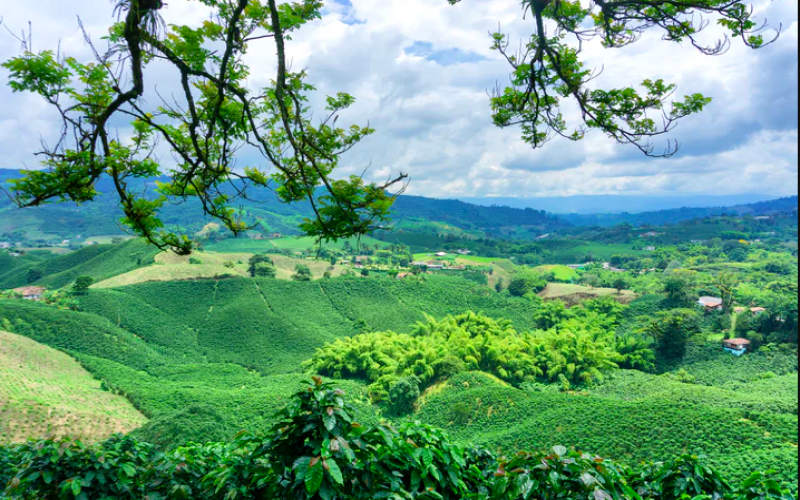
A Comprehensive Analysis of the Development History of Colombian Coffee and the Sidra Variety from Finca La Divisa in Huila
Colombia is the world's third-largest coffee producer and the largest producer of washed Arabica, with specialty-grade beans making up as much as 40% of its exports. From the early experiments of Don Mariano Ospina Rodríguez in the 19th century to the founding of the National Federation of Coffee Growers in 1927, Colombia's coffee industry has forged a distinctive path of development. This article traces the historical threads of Colombian coffee and the distribution of its main producing regions, with a focus on Finca El Diviso in the Huila region, as well as the Sidra variety that has attracted considerable attention in recent years—what exactly is the appeal of this coffee that once shone on the world barista championship stage? Front Street Coffee has also brought in Sidra coffee beans from this estate, and the pour-over parameters will be shared below. [more…]
The Development History of Colombian Specialty Coffee and an Analysis of the Sidra Variety at Finca La Divisa in Huila
Colombia, as the world's third-largest coffee producer and the largest processor of washed Arabica, has a specialty-grade share of up to 40% in its coffee exports. From the establishment of the first experimental plantation by Don Mariano Ospina Rodríguez in the 19th century to the founding of the National Federation of Coffee Growers of Colombia in 1927, the Colombian coffee industry has undergone more than a century of development. In this article, Front Street will take you through this history, outline the characteristics of representative producing regions such as Huila and Cauca, and focus on Finca La Divisa in the Huila region and its Sidra variety—a coffee that has attracted much attention since being selected by Anthony Douglas, the 2022 World Barista Champion. What exactly makes it so uniquely charming? [more…]
Recommended delicious Brazilian coffee beans: balancing budget and drinking frequency
When choosing a tasty Brazilian coffee bean, you can set the complex information aside for now. For everyday bean buying, you need to consider how quickly you'll drink it, how much to buy at once, and whether you'll mainly make black coffee or milk coffee at home. Starting from these two pairs of differences—light or full-bodied, black coffee or milk coffee—and then looking at the roast date and processing method, your judgment will be more in tune with daily life. [more…]
Don't like acidity or bitterness? These four Front Street Coffee pour-over beans are balanced, mellow, and easy to brew
In today's world of increasingly diverse coffee flavors, some people are obsessed with light-roasted beans with bright fruity acidity, while others prefer dark-roasted beans with a rich, sweet aftertaste. But there are still plenty of enthusiasts who just want a cup of coffee that is neither sour nor bitter—balanced and easy to drink. Front Street Coffee has selected four pour-over coffee beans from its extensive bean lineup that suit this kind of preference, covering origins such as Brazil, Costa Rica, and Papua New Guinea. All are medium roasts, brewing-friendly, with flavors dominated by nuts, chocolate, caramel, and cream, balancing sweetness and a sweet aftertaste. Whether you are a beginner just getting into pour-over or a seasoned connoisseur looking for an everyday staple, you can find that cup that is neither sour nor bitter, rich and easy to drink. [more…]